
Whether you’re at the end of a long drive or easing into rougher conditions on the water, your RV or marine battery just works. No second-guessing. No worrying about lithium-ion battery overcharging. No wondering whether everything is running safely behind the scenes.
That reliability isn’t accidental. It’s the result of careful engineering, proven by UL 1973 certification.
UL 1973 is the independent safety standard that validates a lithium battery system can handle heat, vibration, short circuits, and more. It’s one of the clearest answers to the question “Are lithium batteries safe?”

What UL 1973 Is (and Isn’t)
- What it is: A safety standard for stationary and auxiliary lithium battery systems, including RV and marine applications.
- What it isn’t: It does not cover EV propulsion batteries.
- Why it matters: It tests the entire battery system, not just the cells, giving you confidence in the battery you actually install.
System level safety matters. UL 1973 evaluates both the pack design and the brain (the BMS).
What UL 1973 Tests—In Real World Terms
Electrical abuse: How a battery behaves under overcharge or short circuit.
RV example: A charger glitches; the BMS intervenes before damage occurs.
Thermal stress: Operation across temperature extremes and cycles.
Marine example: Sunny deck heat, cool evening air—stable performance through both.
Mechanical stress: Vibration and shock from rough roads or choppy water.
RV example: Miles of corrugation without loose connections or nuisance faults.
Fire propagation: Ensures a failure in one cell doesn’t cascade across the pack.
System intelligence: Validates the BMS actively monitors and responds to protect the pack and connected systems.
If it can go wrong, UL 1973 tests it. That’s how you know your battery performs when conditions aren’t ideal.

“Do Lithium Batteries Explode?”
Let’s Address the Myth. Searches like “do lithium batteries explode?” and “are lithium batteries safe?” usually come from dramatic headlines, not from an understanding of how well-engineered systems actually behave.
Headlines are loud. Good engineering is quiet. Properly designed lithium batteries with a proven BMS and UL 1973 certification are built to prevent unsafe conditions and manage faults if they occur. That includes protection against lithium-ion battery overcharging, overheating, and short circuits. This is the difference between hoping a battery is safe and knowing it has been independently tested.
We explore UL certification, lithium battery safety, and common misconceptions on our podcast. Listen here.
Design + BMS + UL 1973 = a system built for safety, not just performance.
Why RV and Marine Owners Should Care
RV and marine systems push lithium batteries to their limits. UL 1973 is the standard that proves a battery can survive that stress safely.
For RV Owners
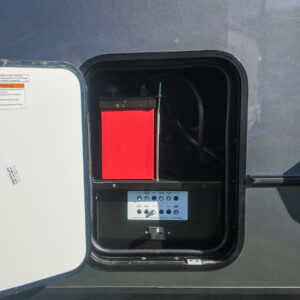 Your battery isn’t sitting on a shelf in perfect temperatures. It’s dealing with tough real-world conditions like:
- Highway heat pushing 120°F inside a compartment
- Mountain cold during early morning boondocking
- Long charge days on solar, generators, or campground hookups
- Vibration from potholes, rough roads, and miles of travel
UL 1973 pushes batteries through the same extreme conditions RV owners face, so you don’t have to worry about thermal runaway, connection failures, or lithium-ion battery overcharging when your system is working hard.
For Boaters
Marine power systems are exposed to forces most electronics will never experience:
- Persistent vibration from wave action and hull resonance
- Salt air and moisture creeping into every compartment
- Rapid temperature swings from direct sun to cool evenings
- Unpredictable charging environments from alternators and shore power
The best marine battery isn’t just powerful; it’s proven to stay safe and stable when the water isn’t. UL 1973 verifies that the battery and BMS can withstand the exact conditions boaters face every single outing.
That’s why choosing the best marine battery starts with confirming UL 1973 system‑level certification, it’s the clearest indicator of long‑term safety and reliability on the water.
Bottom line: UL 1973 doesn’t test for ideal days, it tests for the bad ones. And that’s why it matters.
How Lithionics Builds Beyond the Standard
Plenty of batteries talk about safety. We design around it.
- UL 1973–listed at the system level, so you’re not just getting certified cells, you’re getting a certified system.
- Advanced BMS monitors temperature, voltage, and current, protecting against lithium-ion battery overcharging, short circuits, and out-of-bounds operation.
- Engineered for the real world: From washboard roads to choppy water, our batteries are designed to stay predictable and resilient.
Quick Takeaways (for The Skimmers)
- UL 1973 is the most relevant safety certification for RV and marine lithium battery systems, especially if you’re selecting an RV battery for long-distance or off-grid use.
- UL 1973 validates protection against overcharging, short circuits, temperature extremes, vibration, fire propagation, and other critical conditions.
- Lithionics batteries are UL 1973–listed at the system level, so both the battery and BMS perform under stress.
- Certification streamlines installations, inspections, and insurance, and delivers peace of mind.

FAQs

Are lithium batteries safe?
Yes—when they’re well engineered and independently certified. UL 1973 is the best indicator for RV and marine systems.
Do lithium batteries explode?
Catastrophic failures are extremely rare in properly designed, certified systems. Standards like UL 1973 and intelligent BMS controls are specifically intended to prevent unsafe conditions and contain faults.
What should I look for in an RV or marine battery?
Confirm UL 1973 at the system level, review BMS capabilities, and choose brands with proven reliability.
See how Lithionics pushes past certification requirements with advanced engineering built for real-world RV and marine conditions:
Lithionics: Safety That Goes Beyond the Standard


