
Modern Boats Require a New Approach to Energy Storage
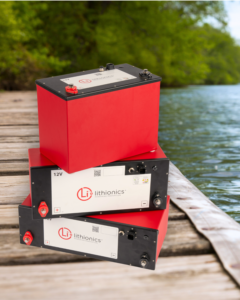
Today’s boats and yacht builders incorporate more advanced electrical systems than ever before.
Modern vessels rely on onboard electrical systems to support navigation, refrigeration, climate control, entertainment, communications, stabilization systems, and offshore operations. As electrical demand continues to increase, modern vessels push traditional battery technology to its limits.
For decades, AGM and flooded lead-acid batteries have been dependable solutions for marine applications. However, many were not designed for the continuous high-energy demands of modern vessels.
This is why more builders, OEMs, dealers, and owners are moving toward integrated marine lithium battery systems based on lithium iron phosphate (LiFePO₄) technology.
Unlike a simple battery replacement, a marine lithium upgrade represents a shift toward a smarter, more efficient electrical engineering.
Safety and Certifications
Safety is the foundation of Lithionics system design.
Every Lithionics lithium-ion battery system is UL 1973 Listed as a complete system, not simply validated at the cell level. This certification confirms that the battery, electronics, and protective systems operate safely together under real operating conditions.
Lithionics systems also incorporate Lithium Iron Phosphate (LiFePO4) chemistry, selected for its thermal stability, long cycle life, and durability in mobile applications.
Together, these design choices create a battery platform engineered for long-term safety and consistent performance.
What is a Marine Lithium Battery System?
A marine lithium battery system is an integrated energy storage solution designed specifically for boats and yachts using lithium iron phosphate (LiFePO₄) battery chemistry.
A complete marine lithium system combines:
- LiFePO₄ battery cells for efficient energy storage
- Battery Management System (BMS) protection
- Marine-grade enclosure design
- Charging system compatibility
- Battery monitoring and diagnostics
The result is more than a battery bank. It is a managed electrical platform designed to provide reliable power in demanding marine environments.
Modern vessels require energy storage systems that can support higher electrical loads while maintaining safety, efficiency, and long-term reliability.
Builders Shift from AGM to Lithium Solutions
The transition from AGM batteries to lithium is being driven by the increasing electrical complexity of modern boats.
Today’s vessels may need to power:
- Air conditioning
- Refrigeration
- Navigation equipment
- Entertainment systems
- Gyro stabilizers
- Communication systems
- Advanced onboard electronics
Traditional lead-acid batteries can support many applications, but they have limitations when vessels require extended runtime, faster charging, and greater usable energy.
5 Advantages of LiFePO4 Marine Battery Systems
#1 More Usable Energy from the Same Footprint
Unlike AGM batteries, which are typically limited to about 50% usable capacity to maximize service life, LiFePO₄ batteries allow you to use nearly all of their rated capacity. That means longer runtime without increasing the size of your battery bank.
Example:
| Battery | Rated Capacity | Typical Usable Capacity |
|---|---|---|
| 2 x 12V 100Ah AGM Batteries | 200 Ah | ~100 Ah |
| 1 x Lithionics 12V 205Ah | 205 Ah | Up to 205 Ah |
What does that mean?
A single Lithionics 12V 205Ah LiFePO₄ battery can provide up to twice the usable energy of two 12V 100Ah AGM batteries.
- Up to 2× more usable energy
- 50% fewer batteries
- Reduced weight and installation space
- Longer runtime for electronics, refrigeration, lighting, and other onboard DC loads
Instead of carrying extra batteries just to avoid over-discharging an AGM bank, a LiFePO₄ system lets you use nearly all of the energy you’ve already installed.
 #2 Faster Charging
LiFePO₄ batteries can accept significantly higher charging currents than AGM batteries, allowing them to recharge more quickly when paired with a compatible charging system. This means less time running generators or waiting at the dock.
What does that mean?
Whether you’re charging from shore power, an alternator, or a generator, a properly integrated LiFePO₄ system can spend more time charging at its maximum rate and less time tapering as the battery fills.
Benefits:
- Reduced generator runtime
- Faster recovery between trips
- More time enjoying your boat
- Improved charging efficiency
#3 Less Weight and More Space
LiFePO₄ batteries store more energy in less space than traditional AGM batteries. By reducing the number of batteries needed, many vessels can free up valuable room while significantly reducing overall battery-bank weight.
What does that mean?
Replacing multiple AGM batteries with fewer LiFePO₄ batteries can simplify installation while reducing weight that affects vessel performance and storage space.
Benefits:
- Smaller battery bank
- Reduced overall weight
- More available storage space
- Simplified installation
 #4 Longer Service Life
LiFePO₄ batteries are designed for thousands of charge and discharge cycles, making them well suited for vessels that spend long days on the water or operate year-round.
What does that mean?
While AGM batteries gradually lose capacity with repeated cycling, LiFePO₄ batteries are engineered to maintain reliable performance through many more charging cycles, helping reduce battery replacements over time.
Benefits:
- Thousands of charge cycles
- Fewer battery replacements
- Lower long-term ownership costs
- Reliable performance year after year
#5 Built for Marine Reliability
A marine lithium battery system is more than a battery—it’s an intelligently managed energy system. Integrated Battery Management Systems (BMS) continuously monitor battery health and help protect the system during charging and operation.
What does that mean?
Rather than relying solely on the battery itself, a LiFePO₄ system actively monitors voltage, current, temperature, and overall battery health to help maintain safe, reliable operation.
Benefits:
- Continuous system monitoring
- Intelligent battery protection
- Real-time battery information
- Greater confidence on the water
Are Lithium Batteries Safe on Boats?
One of the most common questions among boat owners and builders is:
Are lithium batteries safe on boats?
The answer is yes—when they’re designed as a complete marine battery system.
Safety depends on far more than battery chemistry alone. A reliable marine lithium system combines LiFePO₄ battery cells, an intelligent Battery Management System (BMS), compatible charging equipment, mechanical protection, and proper installation.
Because marine environments expose batteries to vibration, shock, humidity, salt, and temperature changes, purpose-built marine lithium systems are engineered specifically to operate in these demanding conditions.
Engineering Safety Into the System
“Marine lithium safety isn’t defined by the battery alone. It comes from designing every component—from the battery and BMS to the charging system—to work together as one integrated electrical system.”
— William Cavanuagh, VP of Engineering
A properly engineered marine lithium battery system continuously monitors battery health and operating conditions while helping protect the system throughout the life of the vessel.
Why Marine Lithium Systems Are Built Differently
Not all lithium batteries are designed for marine applications.
Boats operate in challenging environments where batteries are exposed to:
- Continuous vibration
- Wave impact
- Humidity
- Salt exposure
- Limited access for maintenance
Purpose-built marine lithium systems are engineered to perform reliably under these real-world conditions.
Marine-Grade Protection
A robust enclosure helps protect the battery system from the physical demands of life on the water.
Premium marine lithium systems are designed with:
- Corrosion-resistant materials
- Structural protection
- Environmental durability
- Long-term reliability
These design features help protect the battery throughout years of operation in harsh marine environments.
Intelligent Battery Management
The Battery Management System (BMS) serves as the intelligence behind the battery system.
It continuously monitors:
- Voltage
- Current
- Temperature
- Battery health
This allows the system to operate within safe performance limits while providing real-time visibility into battery health and performance.
Is a Lithium Upgrade Just a Battery Replacement?
No.
An AGM to lithium conversion is more than simply removing old batteries and installing new ones. A successful marine lithium upgrade requires evaluating the vessel’s complete electrical system to ensure the batteries, charging equipment, and onboard systems work together.
Important considerations include:
- Charging equipment compatibility
- Alternator capability
- Inverter and shore-power systems
- Battery monitoring
- Installation design
Lithium technology delivers its greatest benefits when every component works together as a complete electrical system.
The Future of Marine Electrical Systems
As boats become more electrically sophisticated, energy storage is no longer simply a battery selection—it’s a system design decision.
The next generation of marine power will deliver:
- Greater efficiency
- Faster charging
- Intelligent monitoring
- Reduced generator dependence
- Improved offshore reliability
Integrated marine lithium battery systems are already helping shape this future by providing vessels with smarter, more capable, and more dependable electrical platforms.
Ready to Upgrade Your Boat’s Electrical System?
Whether you are replacing aging AGM batteries, planning an AGM to lithium conversion, or designing a new vessel electrical system, Lithionics can help you engineer the right marine lithium solution.
Every vessel has different power requirements. Our team can help determine the ideal battery configuration, charging requirements, and system design for your application.
Request a Lithionics marine lithium battery quote today: Connect with our Sales Engineers.
Frequently Asked Questions
What is a marine lithium battery system?
A marine lithium battery system integrates LiFePO₄ batteries, battery management, charging compatibility, and monitoring into a single energy storage platform built specifically for boats and yachts.
Can lithium batteries replace AGM batteries on boats?
Yes—but replacing AGM batteries with lithium should include evaluating the vessel’s complete electrical system to ensure charging equipment, alternators, and onboard electronics are compatible.
Are LiFePO₄ batteries safe for marine use?
Yes. When properly engineered and installed, LiFePO₄ marine battery systems provide reliable performance through integrated protection, intelligent monitoring, and complete system design.
Do lithium batteries work in saltwater environments?
Yes. Engineers build marine lithium systems to withstand challenging conditions such as vibration, humidity, and salt exposure when properly installed and maintained.
Can lithium batteries reduce generator runtime?
Yes. In many applications, faster charging capability and higher usable energy can reduce generator runtime while improving overall onboard efficiency.


