51V 165Ah Lithium Systems and the Shift Toward High-Voltage RV Power

Modern RV electrical systems are undergoing a structural shift toward high-voltage lithium battery systems.
Instead of traditional 12V house banks and generator-dependent designs, many next-generation RV platforms now prioritize:
- high-voltage lithium energy storage
- inverter-centric power distribution
- alternator-assisted charging systems
- integrated system monitoring and control
A high-voltage RV electrical system uses lithium battery architecture above traditional 12V systems to improve efficiency, reduce current demand, and support higher continuous inverter loads.
A Different Approach to RV Power System Design

Rather than simply increasing battery capacity, modern RV manufacturers are redesigning the entire onboard electrical system.
The focus has shifted from:
“How many amp hours are installed?”
to:
“How efficiently can usable energy be delivered, converted, and replenished in real time?”
Higher-voltage lithium systems play a key role in this transition by improving system-level efficiency across the entire power network. By operating at higher voltage, RV electrical systems can:
- reduce current demand across high-load circuits
- improve inverter efficiency under continuous use
- simplify cable sizing and distribution complexity
- support larger continuous inverter systems
This is especially important as RVs increasingly support residential-style electrical loads such as air conditioning, induction cooking, and remote work setups.
Learn more about the differences between 12V and 51V: 51V Lithium Battery System for RVs & Boats | Complete Guide
Lithionics 51V 165Ah Platform Overview
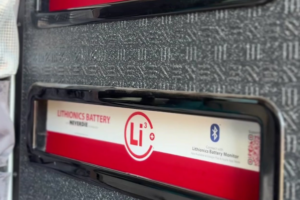
The Lithionics 51V 165Ah lithium-ion battery module delivers approximately 8.4 kWh of usable energy storage, making it well-suited for high-demand RV and marine applications.
This energy storage level is commonly used in:
- high-end RV systems
- marine house banks
- mobile commercial power systems
- integrated inverter-based architectures
Lithionics systems are built around:
- advanced BMS protection architecture
- CAN-based system communication
- high discharge capability for inverter loads
- modular scalability for multi-battery configurations
- integration with smart charging systems
Integration in Modern RV Platforms
Rather than being used as a standalone battery upgrade, 51V Lithionics systems are typically integrated into complete energy ecosystems.
These systems often include:
- inverter/chargers sized for residential AC loads
- DC-DC conversion for legacy 12V systems
- alternator-based charging while driving
- solar input where applicable
- centralized system monitoring
This allows RVs to operate as unified power networks rather than separate subsystems.
Industry Adoption in RV Platforms
Several RV manufacturers and platforms are adopting or integrating lithium-based electrical architectures that reflect this broader industry shift.

Storyteller Overland
Storyteller Overland showcases Lithionics 51V 165Ah battery systems across multiple MODE platform builds, supporting premium off-grid RV power system performance.
These configurations include single and dual-battery setups designed to support:
- extended off-grid camping
- inverter-driven appliances
- rooftop air conditioning systems
- mobile connectivity and remote work environments
This reflects the growing demand for higher-capacity RV lithium battery systems in modern adventure van platforms.
 Winnebago RV
Lithionics battery technology has been used across select Winnebago platforms and upgrade configurations, supporting:
- expanded lithium-based energy storage
- improved system monitoring and diagnostics
- higher-efficiency electrical system design
- increased off-grid capability across product lines
This reflects a broader industry trend toward deeper integration of lithium battery systems into OEM RV architecture.
 Tiffin Motorhomes
The Tiffin Open Trail represents another example of modern RV electrical system design focused on off-grid capability.
The platform incorporates:
- Victron inverter systems
- Secondary alternator integration
- solar charging capability
- lithium-focused electrical architecture
While specific factory configurations vary, the system design reflects a clear shift:
- higher inverter capacity
- faster charging while driving
- reduced generator dependency
- more capable off-grid operation
Smart Alternator Charging Integration
As lithium battery capacity increases, charging systems must evolve alongside it.

Lithionics supports advanced charging architectures designed for modern RV use cases, including smart alternator-based charging systems such as the 51V Smart Alternator Series.
These systems are designed to:
- support high-rate charging while driving
- integrate with battery management systems (BMS)
- improve alternator efficiency and thermal behavior
- maintain controlled lithium charging profiles
Unlike traditional alternator setups, these systems are designed as part of a coordinated energy ecosystem rather than standalone charging devices.
This becomes increasingly important as RV systems move toward larger inverter loads and higher-capacity lithium storage.
System-Level Impact
In practical RV use, higher-voltage systems change how energy is delivered and managed across the vehicle.
Instead of focusing solely on battery capacity, platforms now prioritizes:
- continuous inverter performance
- efficient energy flow under load
- charging speed while driving
- reduced system complexity at high power levels
This is particularly relevant in RVs that support:
- air conditioning
- induction cooking
- residential refrigeration
- remote work environments
- multi-day off-grid operation
Why This Shift Matters
The RV industry is not simply moving toward larger batteries.

It is transitioning toward:
- integrated energy design
- higher-voltage architecture
- smarter charging and alternator integration
- inverter-centric power distribution
- reduced dependence on generators
This shift enables RVs to function more like:
- self-contained mobile living spaces
- extended off-grid environments
- remote work platforms
rather than traditional campground-dependent systems.
 The Lithionics 51V 165Ah battery platform represents a key advancement by enabling:
- higher-voltage operation
- reduced current demand
- improved system efficiency
- scalable energy storage
- integration with advanced charging systems
It supports the broader transition toward more capable, efficient, and integrated off-grid RV power systems.
As manufacturers continue refining high-capacity electrical platforms, 51V lithium architectures are becoming an increasingly important foundation for next-generation RV and marine energy design.


 Imagine hitting the open road, living off-grid, yet still enjoying the comforts of home. Remote Vans is making that dream a reality with cutting-edge van conversions powered by Lithionics’ advanced battery systems.